
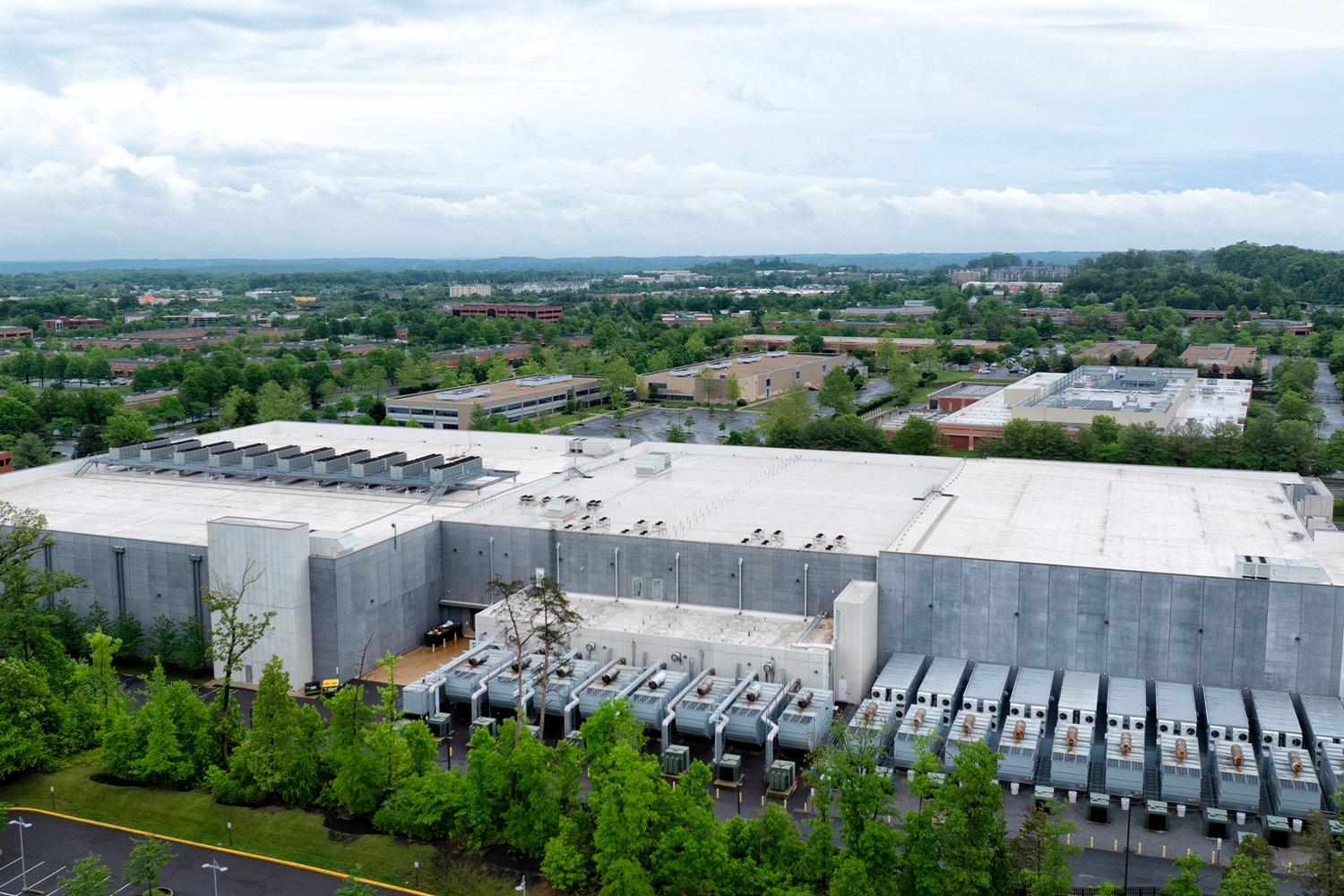
Bakersfield occupies an emerging position in California's data center geography — not yet a primary hyperscale market, but increasingly attractive to enterprise operators and edge colocation providers who need presence in California's Central Valley without paying Bay Area or Los Angeles real estate and power costs. The city's position along the BNSF and Union Pacific rail corridors, its access to natural gas from the Kern County oil fields, and its industrial power infrastructure keyed to the region's agricultural and energy sectors create a foundation that data center developers have begun to take seriously. Edge compute deployments supporting the growing agricultural technology sector in the Central Valley — IoT monitoring for irrigation, autonomous farming equipment, drone operations — create latency-driven demand for local compute infrastructure that Bakersfield is positioned to serve.
Bakersfield's data center roofing environment is shaped by extreme temperature differentials, high UV radiation, and a persistent dust and particulate challenge that distinguishes it from coastal California markets. The San Joaquin Valley is frequently at or near the top of California's air quality problem list, with PM2.5 and PM10 particulate from agricultural operations, wind erosion, and vehicle emissions creating an environment where rooftop HVAC filtration changes frequently and particulate infiltration through unsealed roof penetrations is a real operational problem, not a theoretical one. Data center roofing details in Bakersfield need to address dust infiltration at conduit and cable penetrations with more attention than would be required in a cleaner-air market.
Summer temperatures in Bakersfield regularly reach 105°F to 110°F, making the reflective roofing specification more critical here than in nearly any other California location. A white TPO or PVC membrane in Bakersfield's summer sun creates a surface temperature of approximately 90 to 100°F — hot, but manageable for the outdoor air intake conditions of rooftop cooling equipment. A dark EPDM or aged built-up surface in the same conditions can reach 175°F, dramatically increasing the cooling load for rooftop HVAC equipment and cascading into higher PUE for the entire facility. The economic case for reflective membrane specification is straightforward in Bakersfield: cooling costs at summer peak rates in California are among the highest in the country, and a reflective roof meaningfully reduces the duration and magnitude of those peak-rate consumption events.
Penetration management at Bakersfield data centers needs to address the simultaneous concerns of waterproofing against winter rain events and dust exclusion during the dry season. The two requirements pull slightly in different design directions: the most dust-tight penetration detail (closed-cell foam with silicone overcoat) is also a good waterproofing detail, but it requires more careful application than a simple pitch pocket, which is adequate for water management but poor at dust exclusion. In the Bakersfield market, specifying the more careful penetration detail at every conduit and cable entry pays off in reduced particulate infiltration into the facility's airstream, which reduces filtration maintenance cost over the system's life.
Generator placement and exhaust management at Bakersfield data centers intersects with the San Joaquin Air Pollution Control District's stringent generator permit requirements. The SJVAPCD has some of the most restrictive non-attainment area air quality regulations in the nation, and standby generator permits in Kern County require specific documentation of emissions controls, operating hour limits, and in many cases Tier 4 or equivalent emission control technology. The exhaust stack penetration in the roof must be designed to accommodate the stack diameter and height specified in the SJVAPCD permit, and the permit documentation should be in the roofing contractor's hands before any penetration design is finalized.
Bakersfield's seismic environment is often overlooked compared to Bay Area or Los Angeles, but Kern County has produced some of California's most significant historical earthquakes, including the 1952 Kern County earthquake (magnitude 7.3). Data center rooftop equipment — generators, cooling towers, CRAC units — must be mounted on seismically rated curbs with flexible flashing connections, as required by California's Title 24 and the ASCE 7 seismic design requirements for the region. Contractors moving from Arizona or Nevada to Bakersfield without updating their equipment mounting details for California seismic requirements create a code compliance gap that may not surface until a building inspection or a seismic event.
TPO 60 or 80 mil in a fully adhered or mechanically attached configuration is the appropriate membrane choice for Bakersfield data center builds, with the caveat that adhesive selection for fully adhered systems must account for the San Joaquin Valley's air quality restrictions under SJVAPCD rules that parallel SCAQMD requirements in Southern California. Water-based adhesive formulations that meet the district's VOC limits are available from all major membrane manufacturers but need to be specified explicitly rather than defaulted to by the contractor.
Cable tray penetration density at Bakersfield data centers is typically lower than at coastal California facilities simply because the facilities tend to be smaller edge or enterprise installations rather than hyperscale campuses at this point in the market's development. However, as the market grows — and the agricultural technology and energy sector drives more edge compute demand into the Central Valley — penetration complexity will increase. Establishing the right detailing standards now, when a facility is built, prevents the retrofit problems that arise when additional conduit runs need to be added to a roof that was originally detailed for a lower penetration count.
Long-term roof maintenance in Bakersfield's climate requires attention to UV degradation of sealant materials, particularly at caulked joints in termination bars and pitch pocket fills. The combination of intense UV, high temperatures, and the dry San Joaquin air accelerates oxidation and cracking in standard polyurethane sealants faster than in coastal California markets. Silicone-based sealants specified for UV resistance perform significantly better in this environment and are the correct choice for Bakersfield data center roofing details — the modest cost premium over polyurethane pays back quickly in extended maintenance intervals.
Questions Owners Ask
How does Bakersfield's air quality affect what we need to specify for conduit penetrations?
PM2.5 and PM10 particulate infiltration through unsealed or poorly sealed conduit penetrations can bypass HVAC filtration systems and deposit inside the facility's air distribution infrastructure. For Bakersfield data centers, the preferred penetration detail is a two-stage seal: closed-cell backer rod in the annular space between conduit and sleeve, followed by a UV-stable silicone sealant bead at the surface. This combination provides both waterproofing for winter rain events and dust exclusion during the dry season, at the cost of slightly more careful installation than a simple pitch pocket.
What SJVAPCD permit requirements affect generator stack design in Kern County?
The San Joaquin Valley Air Pollution Control District requires air quality permits for standby diesel generators above 50 bhp, with operating hour limits and emissions standards more restrictive than most other California districts. Tier 4 Final or equivalent emissions control is often required for new permits. The stack design — height, exit velocity, and location relative to air intakes — is part of the permit application. Before finalizing the roof plan for a Bakersfield data center with backup generation, obtain the SJVAPCD permit application requirements and involve the permit engineer in the site and roof layout process to avoid conflicts between the permitted stack design and the as-built roof geometry.
How do we handle cooling load reduction on a Bakersfield roof during 105°F+ summer days?
A white reflective TPO or PVC membrane in Bakersfield's peak summer conditions can reduce rooftop surface temperature by 50 to 70°F compared to a dark membrane. This directly reduces the heat gain through the roof assembly and improves the entering conditions for rooftop cooling equipment. Pairing a reflective membrane with R-25 or higher continuous insulation and sealing all roof penetrations against air infiltration creates a compound effect: lower radiant heat gain, lower conductive heat gain, and no infiltration path for the 105°F outdoor air to enter the conditioned space. For a Bakersfield data center's cooling system, this combination can reduce summer peak cooling load by 8 to 15 percent compared to a poorly specified roof assembly.
Are SCAQMD adhesive VOC rules the same in Bakersfield as in Los Angeles?
No. Bakersfield is in the jurisdiction of the San Joaquin Valley Air Pollution Control District, not SCAQMD. SJVAPCD Rule 4653 governs adhesive and sealant VOC limits in Kern County, and while the structure is similar to SCAQMD Rule 1168, the specific thresholds and product category definitions differ in some areas. Contractors who work primarily in Southern California should verify that their California-compliant product library is specifically compliant with SJVAPCD Rule 4653, not just SCAQMD requirements. Most major manufacturers' California-compliance product lines cover both districts, but confirmation is worth requesting before project start.
How does the Kern County seismic zone affect rooftop equipment mounting compared to LA County?
Kern County's seismic design requirements under ASCE 7 put most commercial facilities in SDC C or D, similar to much of Los Angeles County. The practical requirements for rooftop equipment anchorage — seismically rated curbs, engineer-stamped anchorage calculations, flexible flashing connections — are the same. Where Kern County differs from the most seismically active parts of the LA Basin is in specific fault proximity. Data centers on or near the White Wolf fault system in Kern County should factor the near-fault ground motion amplification into their structural and equipment anchorage design, which may push equipment anchorage requirements above the standard SDC D threshold.