
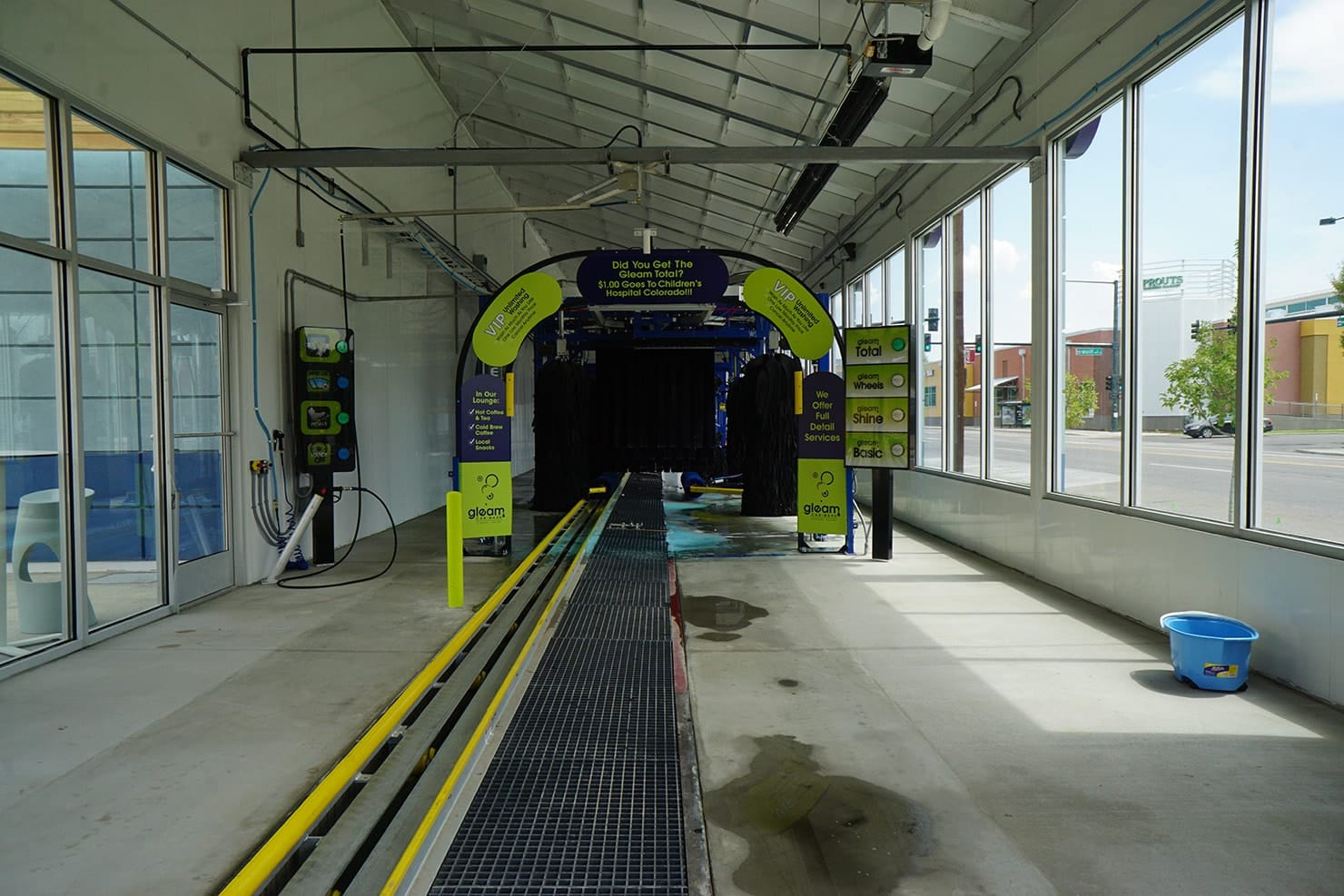
Car wash roofing built for the chemistry below the deck
A car wash is one of the few commercial buildings where the roof is attacked from both sides at once. From above it takes the same Bakersfield sun and the same hard winter rains every other low-slope roof on Rosedale Highway sees. From below it takes a constant fog of warm, chemically loaded air that rises off the wash tunnel and works its way into the deck, the fasteners, and the underside of the insulation. We have built our car wash roofing around that reality. The wash operations clustered along Ming Avenue, the White Lane retail corridor, and the Gosford Road and Stockdale Highway commercial strips run hard volume, and the buildings that house them age from the inside out unless the roof assembly is chosen for the environment.
Most express and full-service tunnels in town push detergent, presoak, tire dressing, drying agents, and ceramic or wax sealants into the air during every cycle. That mist does not stay in the tunnel. It migrates up through gaps around equipment chases, exhaust openings, and the parapet line, then condenses on whatever is coldest. On a poorly detailed roof, that surface is the steel deck and the fastener heads holding the insulation down. We have pulled covers off Bakersfield wash buildings and found rust blooming on fasteners that were only a few years old, with sound membrane still on top. That is the signature failure of this building type, and it is why we treat vapor control as the first design question rather than an afterthought.
The tunnel bay is the highest-risk roof on the property
The roof directly over the active wash equipment lives in the worst conditions of any zone on the site. It sees steam, alkaline detergent particulate, and a thermal swing every time hot water runs against a deck that may have been baking at attic temperatures minutes earlier. Those cycles fatigue seams and flashings faster than anything a retail roof experiences. We size and specify the tunnel bay separately from the rest of the building because the rest of the building is not exposed to the same load.
For the tunnel itself we lean toward a thick PVC membrane, fully adhered or fleece-backed. PVC holds up to the alkaline detergents and wax compounds in commercial wash chemistry far better over the long run than the alternatives, and a fully adhered installation removes the membrane flutter and the open fastener field you get with mechanical attachment over a high-pressure, high-humidity bay. Just as important, we look at what is happening under the deck. A correctly placed vapor retarder and the right insulation strategy keep that warm interior air from reaching a cold structural surface where it can condense and quietly corrode the building from beneath the roof.
Drainage, canopies, and the transitions in between
Not every wash in Bakersfield is a full tunnel. In-bay automatics and self-serve bay operations carry less airborne chemistry but tend to hide drainage problems instead. The roofs over equipment bays are small and often nearly dead flat, which means even minor deck deflection turns into standing water that sits through the dry months and then never fully clears. We check drainage on every car wash inspection because ponding over a bay full of pumps and reclaim equipment is the leak nobody notices until it reaches a control panel.
The vacuum islands and customer canopies on the exit side are their own scope. They are usually metal or EPDM-clad and they catch vehicle exhaust, overspray, and the full outdoor thermal cycle. The single most common chronic leak we find on express washes here is the joint where a canopy ties back into the main building, and the canopy drain connections right alongside it. Those details wear mechanically and chemically at the same time, so we re-flash and re-detail them as deliberately as we do the tunnel.
Working around a wash that does not want to close
Bakersfield washes run seven days a week through most of the year, and a closed day is lost revenue an owner can feel. We plan around that instead of fighting it. Tunnel roof work is sequenced into the early-morning or late-evening window when the line is down, with each section dried in before the wash reopens. Exterior building roofs, vacuum canopies, and customer areas can usually be handled during operating hours with traffic control and crew staging that keeps vehicles clear of the work zone. The goal is a roof scope the wash barely notices on the schedule and never notices again on the deck.
Where chemical exposure meets the warranty
Standard single-ply warranties almost always carry an exclusion for chemical exposure, which is exactly the condition a car wash creates. Before we specify anything over a tunnel, we confirm with the manufacturer that the chemical program your wash actually runs is compatible with the membrane and that the installation conditions are covered. Several manufacturers offer dedicated chemical-exposure or car-wash warranty options, and we identify those during specification rather than discovering the gap after a claim. That confirmation is part of the proposal, not a surprise on the back end.