
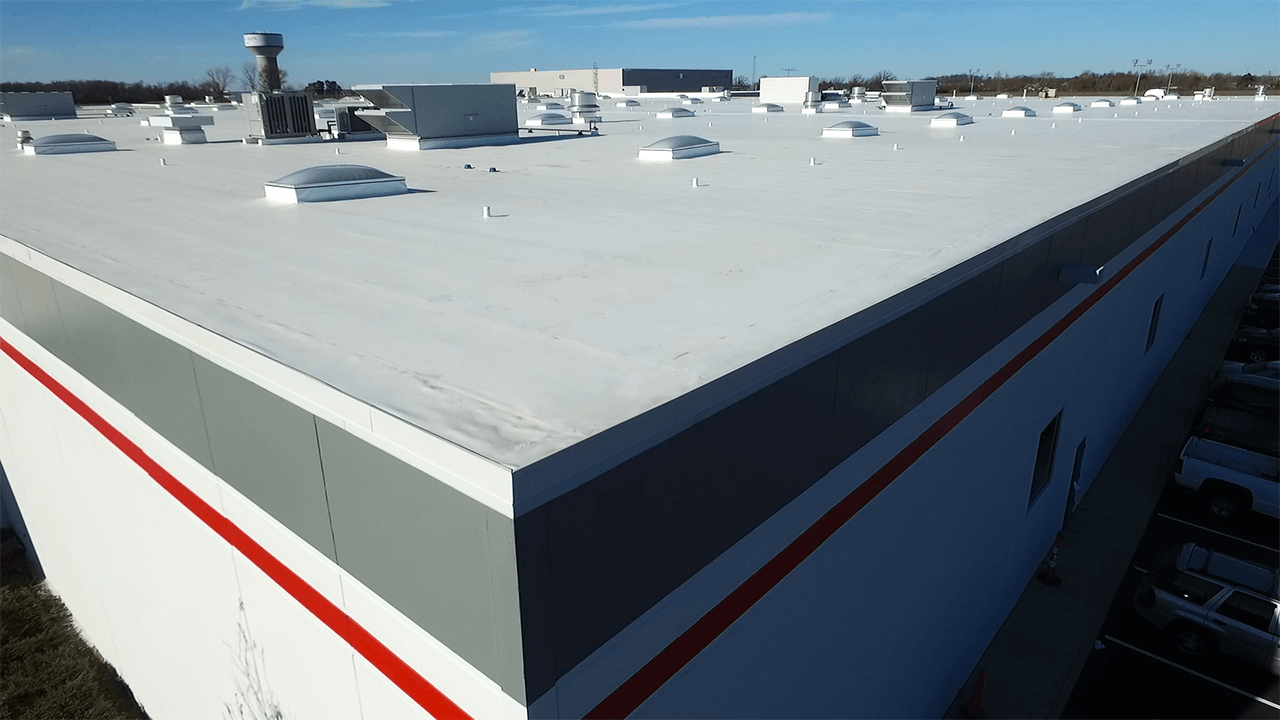
KEE Roof System deserves a direct roof walk before anyone turns it into a generic budget number. This assembly is usually considered for premium thermoplastic membrane for challenging exposures, and the field questions are plasticizer retention, chemical resistance, and welded seams. For KEE roof system, we check deck type, insulation, attachment, drainage, parapets, edge metal, rooftop traffic, existing repairs, and Title 24 requirements before recommending this roof system.
KEE Roof System in Bakersfield has to be planned around San Joaquin Valley exposure instead of a clean-room specification. Heat, ultraviolet aging, wind, dust, sudden rain, roof equipment traffic, tenant access, and older repairs can all change the correct answer for KEE roof system. For KEE roof system planning, Cool California explains that California has 16 climate zones and that new or replacement low-slope roofs are subject to Title 24 cool-roof requirements, with exceptions and product-rating details. That local fact changes the KEE roof system inspection because roof drains, low areas, edges, curbs, wall transitions, and repair history need more than a quick visual check from a ladder.
Our first step for KEE roof system is to identify what the existing roof is actually doing. For KEE roof system, we document membrane type, roof age if known, deck condition, slope, insulation profile, drainage, parapets, coping, gutters, scuppers, curbs, wall transitions, pipe penetrations, skylights, and any interior leak pattern. If this roof system can be repaired with confidence, we explain the repair. If the KEE roof system roof is past that point, we show the conditions that make another patch cycle unreliable.
For KEE roof system, product names matter only when they are tied to the roof assembly in writing. If a manufacturer-covered system enters the KEE roof system discussion, we separate product line, installer requirements, inspection expectations, closeout forms, owner maintenance obligations, and the limits of any written coverage.
Material selection for KEE roof system depends on the roof, not on a single favorite system. A white TPO or PVC assembly may fit KEE roof system on a broad low-slope roof where reflectance, welded seams, and rooftop equipment access matter. Modified bitumen or built-up roofing may be more practical for KEE roof system on an older roof with many transitions. Silicone coating may extend service life for KEE roof system when the membrane is sound, preparation is realistic, and ponding details are addressed. Metal work may be the right answer for KEE roof system where fasteners, laps, corrosion, and movement control the risk.
Pricing for KEE roof system is driven by roof access, tear-off volume, wet insulation, deck repair, roof height, edge metal, drain work, staging, after-hours restrictions, custom fabrication, and how much occupied space must stay protected. A simple KEE roof system repair near Tejon Ranch Commerce Center is a different project than a phased reroof over a warehouse, school, medical office, hotel, restaurant, church, distribution center, or government building. We write KEE roof system estimates so ownership sees what is included, what is excluded, and which hidden conditions could change the final scope.
Code and energy review matter for KEE roof system because California reroof work often intersects with Title 24 and local inspection requirements. For KEE roof system permitting and product selection, Seventh Standard Road, Shafter, Buttonwillow, Wasco, Delano, Lamont, Arvin, Taft, and Tehachapi give Bakersfield commercial roof work a countywide mix of warehouses, agriculture support, oil-field support, retail, schools, and public buildings. For KEE roof system, we watch for recover limits, insulation changes, product-rating documentation, cool-roof requirements, deck repairs, drainage changes, and rooftop equipment supports that need to be settled before crews open a large section of roof.
Occupied-building control is a major part of our KEE roof system planning. For KEE roof system, we map access routes, parking impacts, loading zones, dumpster locations, crane or lift windows, roof loading, noise windows, interior protection, tenant notices, and daily housekeeping before work starts. For KEE roof system at operating facilities, the crew plan has to be visible to the site contact without turning every roof decision into a business interruption.
Weather readiness is built into our recommendations for KEE roof system. For KEE roof system weather readiness, The City of Bakersfield Economic and Community Development department includes downtown, brownfield and site reuse, historic preservation, public notices, community development, and climate-related programs. Before a forecast wind or rain event, KEE roof system roofs may need loose metal secured, open work protected, drains cleared, scuppers checked, temporary tie-ins inspected, and active leaks stabilized. After weather moves through on a KEE roof system roof, the priority is checking perimeter edges, uplift patterns, punctures, seams, coating fractures, rooftop equipment, skylights, and wet insulation.
Roof traffic often decides how long KEE roof system work lasts. On KEE roof system roofs, HVAC technicians, sign vendors, solar contractors, grease-hood service crews, telecom workers, maintenance staff, and security vendors may all cross the same roof after closeout. For KEE roof system, that affects walkway pads, pipe supports, curb repairs, access ladders, tie-in locations, coating thickness, fastener choices, and whether the owner needs scheduled maintenance instead of waiting for the next leak call.
Local building stock gives KEE roof system a wide range of roof conditions. For KEE roof system service-area planning, Meadows Field Airport serves the Southern San Joaquin Valley from north Bakersfield and supports passenger terminal, aviation service, maintenance, FBO, hangar, and airport-support buildings. During KEE roof system reviews, we may see older asphalt roofs downtown, white single-ply roofs on newer office and retail buildings, coated roofs on warehouses, exposed-fastener metal in industrial areas, and patch-heavy roof fields near agriculture or oil-field support uses. The right KEE roof system scope depends on which of those conditions is actually on the building.
The best time to discuss KEE roof system is before the roof controls the calendar. Bakersfield buildings tied to KEE roof system can fail in stages: one detail opens, water reaches insulation, another weather cycle expands the path, and interior damage forces a rushed decision. Calling early about KEE roof system gives us room to inspect, document, price responsible options, order compatible materials, and plan work around operations instead of reacting after a preventable roof problem has grown.