
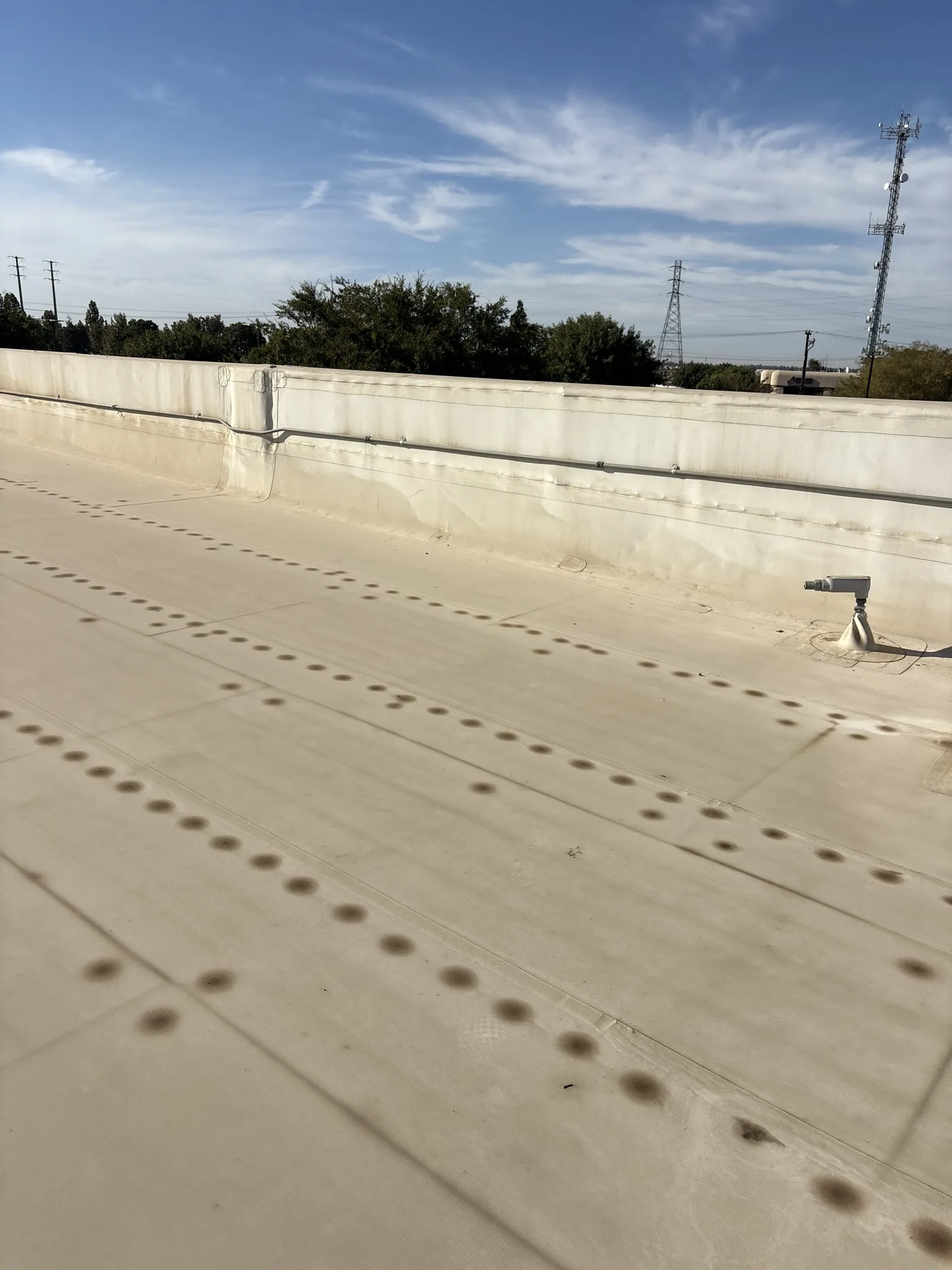
Weathered existing TPO documented during a Bakersfield site visit before repair. Shown for condition assessment; the photo does not establish the cause of damage.
An adjuster typically walks a commercial roof once. That single visit, and whatever the roofing contractor hands over before or during it, does most of the work in deciding whether a claim covers a full section of membrane or just the two feet of damage that happened to be visible from the access hatch. Ownership groups running property along the CA-99 corridor, the Rosedale Highway commercial belt, and the industrial parks near District Boulevard and Fruitvale learn this the hard way when a storm-damaged roof gets a partial approval instead of the scope the building actually needs.
We're your roofing contractor, not a public adjuster - we document and substantiate the roof damage so you and your adjuster work from an accurate scope. That distinction matters. We don't file the claim, negotiate the settlement, or represent the owner against the carrier. What we do is put a roofing eye on the damage before the paperwork gets written: photograph the pattern, measure the affected area, pull moisture readings where water may have reached insulation, and separate storm-caused damage from the wear a 15-year-old membrane already had.
What a Commercial Roof Claim Actually Requires
A usable claim file starts with dated photos that show the damage pattern across the whole roof, not a handful of close-ups. We measure the affected square footage, note membrane type and approximate age, check flashing, coping, curbs, and drains for related damage, and record any interior leak evidence tied to the same event. Where the roof shows granule loss, punctures, or seam separation, we photograph it against a scale reference so the extent is not a judgment call later. A written narrative ties each observation back to the storm date and the mechanism of damage - wind uplift at an edge, hail bruising on a coated membrane, or wind-driven debris impact - because a carrier reviewing the file needs to see cause and condition together.
Meeting the Adjuster on the Roof
When ownership schedules an adjuster walk, we can be on the roof for it. Our role there is to point to specific conditions - a fractured seam, a lifted edge, a section of exposed insulation - and explain why each one belongs in the scope. Adjusters see a high volume of roofs and are not always roofing contractors themselves; a contractor's technical framing of what a repair actually requires (tear-off width, matching material availability, code-required underlayment or insulation upgrades) often changes what ends up in the written estimate. We stay in our lane during that walk: we are there to document and explain roof condition, not to argue policy interpretation or coverage limits.
Building the Complete-Scope Case
"Complete scope" means nothing legitimate gets left off the estimate - not an inflated number, just an accurate one. On a Bakersfield low-slope roof, that can include code-triggered items like updated insulation R-value, secondary drainage where the original design didn't have it, or full-width membrane replacement when patch repairs on an aging roof would void a manufacturer warranty on adjacent, undamaged sections. We itemize these separately from the storm damage itself so ownership and the adjuster can see which line items are storm-caused repair and which are code or manufacturer requirements triggered by opening up the roof.
When a Claim Comes Back Denied or Underpaid
A denial or a scope that only covers part of the roof is common, especially when the original inspection was done from the ground or through a drone flyover without a roof walk. When that happens, we can return to the roof, produce a supplemental report with additional photos, measurements, and scope notes, and hand it to ownership or their public adjuster to submit back to the carrier. We don't negotiate that submission with the insurer - that conversation belongs to the owner or the licensed public adjuster representing them. Our contribution is a roofing-accurate record of what the roof needs, not a legal or insurance opinion on what the policy owes.
Bakersfield Roof Stock Behind These Claims
The buildings generating these claims reflect Kern County's economy. Oil-field support buildings around Oildale and the Kern River oil field area carry older built-up and modified bitumen roofs that show wind and UV damage differently than a newer membrane. Ag-processing and cold-storage buildings along the CA-99 corridor often have large, flat single-ply roofs where hail bruising and wind uplift at parapets are the recurring damage patterns. Newer distribution and logistics buildings along the Rosedale Highway corridor, the Seventh Standard industrial area, and the Tejon Ranch Commerce Center at the I-5 interchange tend to run white TPO or PVC systems, where hail impact and wind-lifted seams are easier to document but still require a careful walk to catch. Across all of it, San Joaquin Valley summer heat accelerates membrane aging between storm events - a roof that took wind damage in an atmospheric-river winter storm may already have UV-brittle seams and flashing from the prior summer, which is exactly the kind of pre-existing condition a claim file needs to address honestly rather than ignore.
What We're Seeing in the California Insurance Market
Commercial property insurance in California has generally tightened in recent years - more carriers requesting roof condition reports before binding or renewing coverage, higher wind and hail deductibles on some policies, and closer scrutiny of roofs over a certain age. That makes a clean, dated inspection record useful for more than one claim: the same documentation that supports a storm claim can also support a renewal underwriting request or a roof-condition questionnaire from a carrier. We keep that in mind when we put a report together, but we're describing a market trend here, not making a coverage promise - every policy and every carrier decision is different.
If a storm has already moved through and the roof shows signs of damage, the sooner it gets documented, the cleaner the claim file. Waiting lets weather cycles blur the line between storm damage and ordinary wear, which is the exact ambiguity that gets claims underpaid.