
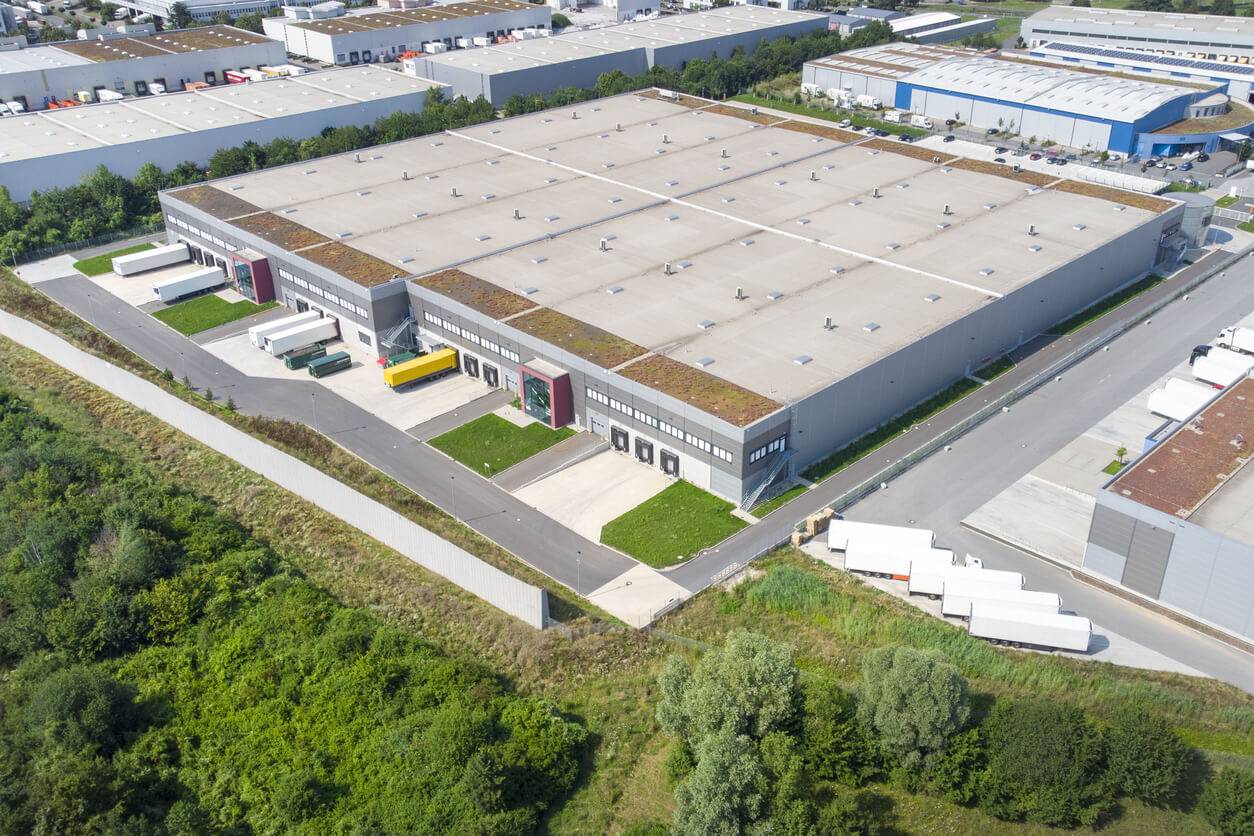
Bakersfield's industrial economy runs hot in more ways than one. From the sprawling Chevron and Aera Energy field support facilities off Rosedale Highway to the Berry Petroleum tank farms scattered across the south county, the buildings servicing Kern County's oil patch face roofing conditions that most California contractors never encounter. Add the BNSF rail yard near Downtown, Amazon's massive distribution center off East Brundage Lane, and the logistics warehouses stacking up along the State Route 99/58 interchange, and you're looking at millions of square feet of roofing that gets cooked for six months straight and then largely ignored - until something fails. That's not a maintenance strategy. It's a liability.
Cool roof systems aren't just an environmental talking point in Kern County - they're an energy cost argument that pays for itself. A white thermoplastic polyolefin (TPO) or a highly reflective modified bitumen cap sheet can reduce surface temperatures by 60 to 80 degrees, cutting cooling loads dramatically in facilities where the mechanical systems are already fighting 106°F ambient air. Amazon's distribution model depends on tight building envelope performance; their Bakersfield facility demands it. We install 60-mil and 80-mil TPO across large distribution and logistics roofs throughout the 99 corridor, using induction welding anchors to achieve the wind uplift ratings required without compromising the membrane. On food processing and cold storage facilities near the Friant-Kern Canal industrial area, we often spec a two-ply modified bitumen system for durability in areas where rooftop refrigeration condensers create localized heat and vibration stress.
Bakersfield's near-zero annual rainfall - roughly six inches - creates a false sense of security about roof condition. Owners see dry ceilings for years, assume the roof is fine, and defer maintenance until a seam failure during one of those rare heavy rain events causes interior damage that dwarfs what a timely repair would have cost. We push clients toward annual infrared thermography scans on large commercial roofs. Wet insulation doesn't show up in a visual inspection - it shows up in the energy bills and eventually in the ceiling tiles. Thermal imaging after hours, when the membrane has shed its daytime heat load, reveals saturated insulation boards that look perfectly intact from the surface. We locate the damaged areas, core-cut to confirm, and replace only what's wet rather than tearing off a full roof that still has serviceable sections.
UV intensity in the southern San Joaquin Valley is among the highest in North America. At roughly 35 degrees north latitude with 280 or more clear days per year, the cumulative UV exposure on roofing materials accelerates oxidation, brittleness, and surfacing erosion faster than in coastal or northern California markets. Older built-up roofs on the Friant-Kern Canal corridor facilities show significant alligatoring and surface erosion after 10 to 12 years - what might last 20 years in Sacramento deteriorates in half the time here. When we specify new systems, we account for that by selecting membranes with documented UV resistance and applying reflective coatings on systems where the base membrane alone won't hold up to the exposure cycle.
Skylights and rooftop penetrations on older Kern County industrial buildings deserve particular attention. Facilities dating to the 1970s and 1980s - common in the older oil field support corridors off Norris Road and Alfred Harrell Highway - often have original curb flashings and pitch pockets that have never been properly rebuilt. Pitch pockets are slow failures: they oxidize, crack, and allow water intrusion over years, not overnight, so they rarely trigger emergency calls. But they reliably cause insulation saturation and structural deck damage when left unaddressed. We photograph and document every penetration on initial assessments and prioritize pitch pocket replacement and curb flashing reconstruction as part of any maintenance agreement.
Wind is an underappreciated factor in Kern County roofing. The Tehachapi Pass funnels significant wind energy into the southwest end of the valley, and facilities along the 58 corridor toward Mojave and Tehachapi see sustained winds and gusts that can stress perimeter edge metal and membrane terminations on poorly-detailed roofs. We design edge metal systems to the appropriate ASCE 7 wind zone for each facility location, specifying continuous cleat systems and proper counter-flashing heights on parapet walls rather than the minimalist edge details that cut costs on initial construction and then fail in the first serious wind event.