
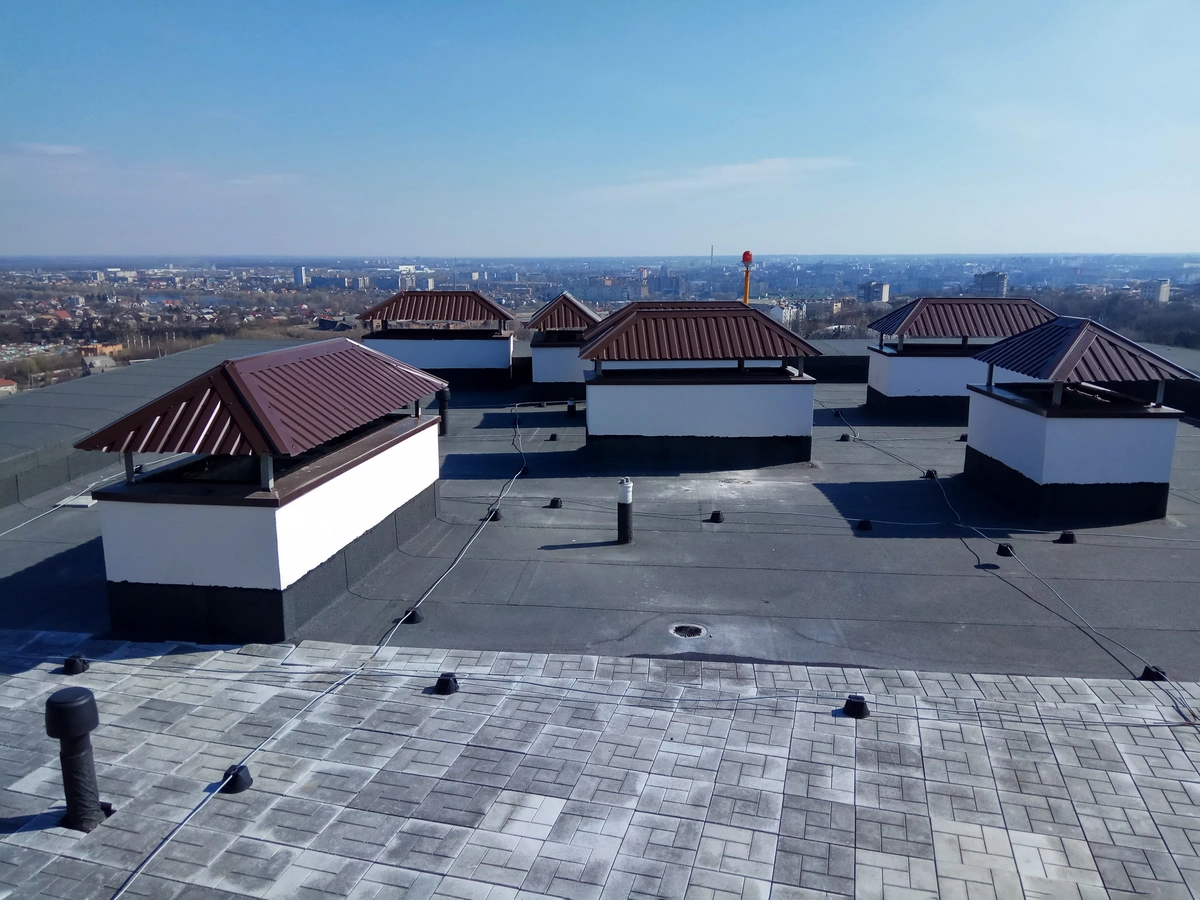
Chevron's Bakersfield Division offices — the hub of California's San Joaquin Valley oil patch administrative operations — along with Kern County government offices, regional healthcare headquarters, and the Stockdale business corridor's Class A office inventory define Bakersfield's commercial office market. California's Title 24 energy code requirements, the Central Valley's extreme heat, and the agricultural dust environment make Bakersfield office building roofing a specialized discipline that rewards contractors with genuine local market knowledge.
Occupied-building protocols in Bakersfield's office market include the Cal/OSHA requirements applicable throughout California — fall protection, hazardous material pre-testing, and confined space access procedures — along with the specific logistics challenges of a Central Valley city where summer ambient conditions can make prolonged outdoor rooftop work genuinely hazardous. Cal/OSHA's heat illness prevention regulations (California Code of Regulations Title 8, Section 3395) require specific rest, shade, and hydration provisions for workers when temperatures exceed 80°F — a condition that applies to essentially every Bakersfield roofing workday from May through October. Reputable Bakersfield commercial roofing contractors include heat illness prevention plans as a standard element of their occupied-building project protocols.
Multi-RTU HVAC coordination on Bakersfield office buildings involves the same California refrigerant handling requirements as other state markets but with the added consideration that summer HVAC downtime tolerance is effectively zero for occupied office space in a city that regularly sees 110°F conditions. Bakersfield commercial roofing contractors working on occupied office buildings schedule all RTU-adjacent work for pre-dawn start times in summer months and implement strict same-day reconnection standards. Summer morning air temperatures in the San Joaquin Valley can already exceed 80°F by 7 AM on the hottest days, making early start times essential both for heat illness prevention and for completing RTU work before ambient conditions make further work unsafe for crews and uncomfortable for tenants.
Green roof options are less common in Bakersfield than in coastal California markets due to the climate's demands — maintaining vegetation through Bakersfield's long, dry, intensely hot summers requires irrigation systems that add cost and operational complexity. However, cool roof specifications that significantly exceed Title 24 minimums are actively pursued by Bakersfield's energy-conscious office property owners, and several Kern County commercial properties have installed high-albedo TPO or aluminum-coated modified bitumen systems specifically to reduce cooling costs for what are among the highest per-square-foot cooling expenses in any California commercial market.
California's Title 24, Part 6 for Climate Zone 13 requires aged solar reflectance of 0.55 and thermal emittance of 0.75 for low-slope nonresidential roofs. For Class A Bakersfield office buildings where top-floor executive offices and conference rooms face direct solar heat gain through an underperforming roof assembly, specifications routinely exceed Title 24 minimums — reflectance values of 0.70 or higher are common for premium properties. SCE commercial efficiency programs serving Kern County customers have offered rebates for qualifying cool roof installations that stack with federal energy efficiency provisions for office building owners.
Agricultural dust management is an ongoing operational requirement for Bakersfield office roofing maintenance. Unlike urban particulate in other California markets, San Joaquin Valley agricultural dust carries organic matter and pesticide residue that deposits on rooftop drain surfaces and HVAC unit inlets. Office building drain strainers and RTU filters require more frequent attention in Bakersfield than comparable systems in coastal California cities — monthly drain inspection during the dust-intensive months of June through October is standard for large Kern County office properties to prevent debris-induced ponding that creates ceiling moisture events in occupied spaces.
Lease renewal considerations for Bakersfield's Class A office market are shaped by the energy-sector dominated tenant base — Chevron, Aera Energy, and various oil service companies represent a significant share of downtown and suburban Class A office occupancy. These technically sophisticated tenants are capable of detailed building performance assessments and include roof condition, energy compliance documentation, and utility cost management in their facility evaluations. A building owner who can demonstrate Title 24 compliant roofing with documented maintenance history has a meaningful advantage in retaining energy-industry tenants whose facility standards exceed those of typical commercial office users.
Air quality considerations specific to Bakersfield — one of California's most challenging non-attainment air quality zones — affect rooftop work permitting and scheduling. The San Joaquin Valley Air Pollution Control District regulates certain roofing-related emissions, including VOC content of adhesives and sealants. Bakersfield commercial roofing contractors are familiar with these requirements and specify compliant low-VOC products as a standard practice, avoiding the permitting complications and potential penalties that can arise when contractors from outside the San Joaquin Valley region bring non-compliant products to Kern County projects.
Semi-annual maintenance for Bakersfield office building roofing should specifically address pre-summer drain cleaning and HVAC curb inspection — ensuring drainage pathways are clear before the rare but intense winter rains give way to dust accumulation season — and post-monsoon/fall inspection to assess any membrane fatigue from the summer heat cycle. The combination of extreme heat, UV intensity, and agricultural dust creates an accelerated aging environment that rewards proactive maintenance over reactive repair cycles.
- What Cal/OSHA heat illness requirements apply to office roofing work in Bakersfield?
- California Code of Regulations Title 8, Section 3395 requires rest, shade, and hydration provisions when temperatures exceed 80°F — a condition applicable to essentially every Bakersfield roofing workday from May through October. Reputable contractors include heat illness prevention plans as a standard element of summer project protocols, not an optional compliance add-on.
- When can HVAC work be scheduled on occupied Bakersfield office buildings?
- Summer HVAC downtime tolerance is essentially zero in Bakersfield's 110°F conditions. Pre-dawn start times for RTU-adjacent work with same-day reconnection standards are the established protocol. Morning temperatures above 80°F by 7 AM on the hottest days make early starts both a heat illness prevention requirement and a practical necessity for completing unit work before ambient conditions deteriorate.
- What are Title 24 cool roof requirements for Bakersfield office buildings?
- Climate Zone 13 requires aged solar reflectance of 0.55 and thermal emittance of 0.75. Bakersfield Class A office buildings commonly exceed these minimums — specifying reflectance values of 0.70 or higher — to address the extreme cooling costs in what is among the hottest commercial real estate markets in California.
- How does agricultural dust affect Bakersfield office building drain maintenance?
- San Joaquin Valley dust carries organic matter that accumulates in drain pathways faster than in urban markets. Monthly drain inspection during June-October dust season is standard for large Kern County office properties, preventing debris-induced ponding that can reach occupied ceiling spaces before visible exterior symptoms appear.
- Why do energy industry tenants have higher roofing standard expectations in Bakersfield?
- Chevron, Aera Energy, and oil service companies — a dominant share of Bakersfield Class A office occupancy — are technically sophisticated and include building energy performance, Title 24 compliance, and roof maintenance documentation in their facility assessments. Buildings with documented compliance and maintenance history have a measurable advantage in retaining these premium tenants.