
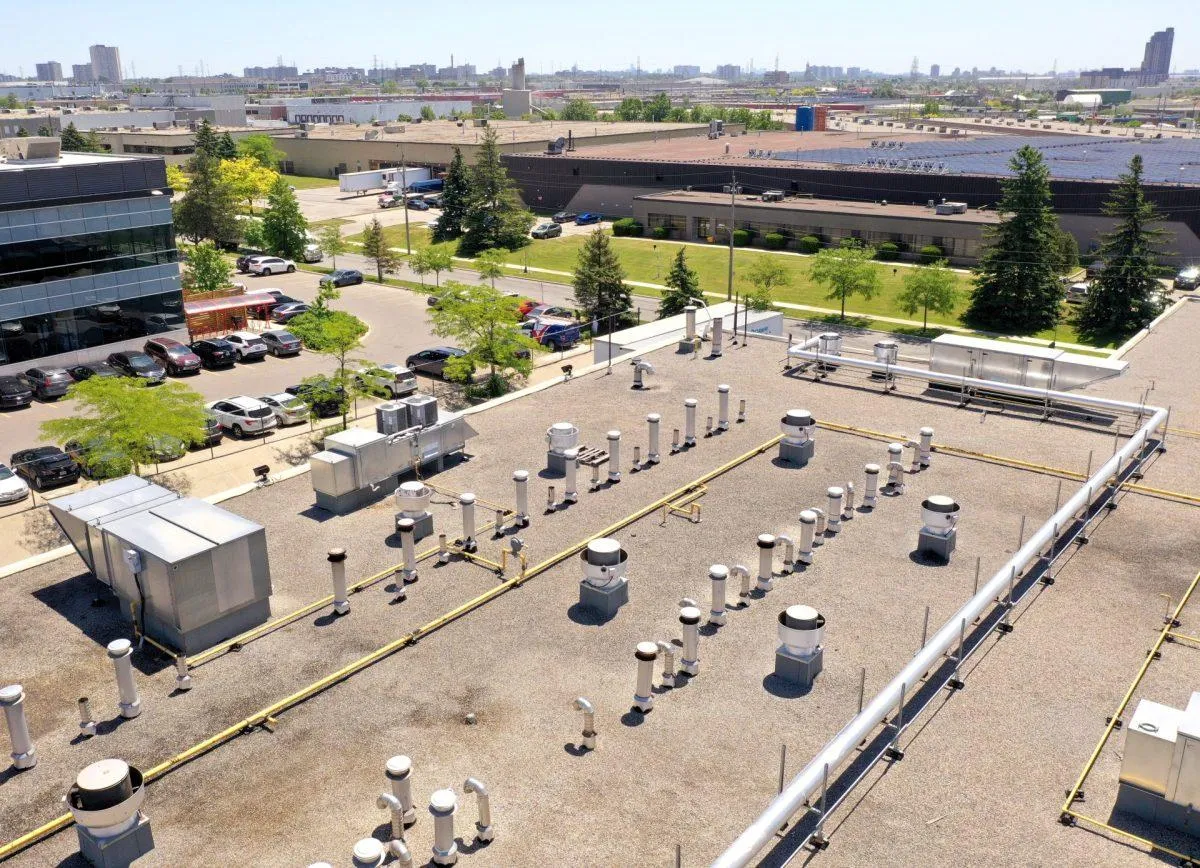
Roofing for the plants that feed the valley
Kern County is one of the most productive agricultural regions in the country, and Bakersfield is where a lot of that harvest gets washed, cut, cooked, frozen, and packed. The processing plants and cold-pack houses along the CA-99 corridor, out toward Shafter and Wasco, and through the industrial blocks off Edison Highway and Pierce Road run on tight food-safety margins and even tighter production calendars. Roofing one of these buildings is not the same job as roofing a warehouse next door. The roof sits over a regulated production environment, it has to survive a washdown-humid interior, and it carries the refrigeration and process loads that come with turning raw product into shelf-ready food.
We plan food processing roofing to keep a leak from ever becoming a food-safety incident, because above an active line a leak is exactly that. It is a call to the plant's quality assurance team, a possible product hold, and a paper trail with a regulator, not a routine repair. Designing the assembly and the schedule to prevent that is the whole point, and it shapes every decision from the membrane down to the day we mobilize.
Materials have to clear the food-safety plan first
Not every commercial roofing material is acceptable above a food production zone, and that is the part outside contractors miss. The membrane selection starts from the USDA or FDA acceptability picture for the specific environment. White TPO and PVC single-ply are generally acceptable over enclosed processing areas, but the exact product formulation and installation method still get confirmed against the plant's food-safety plan. The adhesives, primers, and sealants in the flashing details get the same scrutiny, because many standard roofing adhesives carry solvents that have no business in a food production space. We confirm material acceptability with the plant's QA team before anything is specified over a food contact zone.
The sanitation window runs the schedule
Bakersfield processing plants commonly run two or three shifts, with a weekly sanitation window as the only stretch when the floor is not producing. Any roofing work that opens the building envelope above an active line has to live inside that window, with the production team and QA manager confirming the floor is clean and protected before we cut anything. We build the phasing around the plant's calendar instead of asking the plant to bend to ours, and each opened section is dried in before the floor goes back into production. During peak harvest packs, when the plant may run flat out, we schedule around planned maintenance shutdowns rather than forcing access.
Washdown humidity and what it does to the deck
Sanitation in a food plant means high-pressure, high-temperature washdown, and that moisture does not stay on the floor. It loads the interior air with humidity that drives up through the assembly and looks for a cold surface to condense on. Combined with the refrigeration these buildings run, that vapor drive can quietly wet insulation and corrode the steel deck from beneath without ever showing as a roof leak from above. We treat vapor control as a design input on this building type, not an extra, and we detail the assembly so interior humidity is not free to reach a cold structural surface.
Cold rooms, blast freezers, and the loads overhead
Freezer rooms, chill rooms, and blast-freezing areas raise the stakes again. A roof over a refrigerated space has to keep the thermal line continuous so condensation does not form inside the assembly, and the tapered insulation over those areas has to be designed around the actual operating temperatures and the direction the vapor drives in this climate. Get it wrong and you get hidden condensation, deck corrosion, and insulation failure with no exterior symptom until something structural shows up. On top of that, these roofs carry heavy rooftop refrigeration equipment and the condensing units that serve it, so drainage and structural support around that equipment get designed deliberately. Ponding over a freezer is not just a roof problem; it adds thermal load to the refrigeration system below it.
When a leak happens during a run
If water does reach an active line, the response is immediate contact with the plant's QA and facilities team for product-hold evaluation and environmental documentation, then priority mobilization for temporary dry-in. We provide 24-hour emergency contact for food processing clients and we support the plant's incident reporting with the documentation it needs. Roof condition is also a standard item in USDA and FDA facility inspections, so we hand over condition records and repair documentation that a QA manager can produce on the spot to show proactive maintenance.